Discover trusted Skin Cancer Treatment in Ashmore, where cutting-edge technology is paired with compassionate care. Start with a thorough skin cancer check in Ashmore to enable early detection and ensure a more effective path to recovery.
Skin Cancer Treatment In Ashmore
Skin Cancer Check Ashmore
75514 1616
450+
5-star reviews from Satisfied Customer
Skin Cancer Check Ashmore
Our team offers advanced Skin Cancer Treatment Ashmore, focusing on early detection through comprehensive skin cancer checks. We deliver personalised care and tailored treatment plans designed to support long-term skin health and well-being.
Specialised Experts
Expert specialists delivering precise diagnosis and effective treatment.
Personalised Treatment Plans
Customised treatment plans tailored to each patient’s unique skin cancer needs.
Tailored Treatments
Comprehensive prevention and treatment.
Empowerment
Comprehensive education on skin cancer prevention and early warning signs.
Successful Treatments
0
+
Professionals
0
+
Years Experience
0
+
Our Treatments: Advanced Care for Skin Cancer check Ashmore
We are dedicated to delivering exceptional care and advanced diagnostics for the prevention and detection of skin cancer. Our experienced specialists provide personalised attention with comprehensive Skin Cancer Check Ashmore and expert, tailored treatment plans to ensure the best possible outcomes.
Graft Surgery
Using skin grafts from other body parts to close large or complex wounds.
Margin Control Surgery
Microscopically controlled surgery ensures complete cancer removal and preserves cosmetic appearance.
Skin Cancer check Ashmore
Mole Mapping
Cream treatments
Non-surgical cream treatments offer a therapeutic approach for managing basal and squamous cell skin cancers. Although medical professionals sometimes refer to ointment treatment as surgical due to its tissue-removing effect, the procedure does not involve the use of surgical instruments.
Curettage and cautery
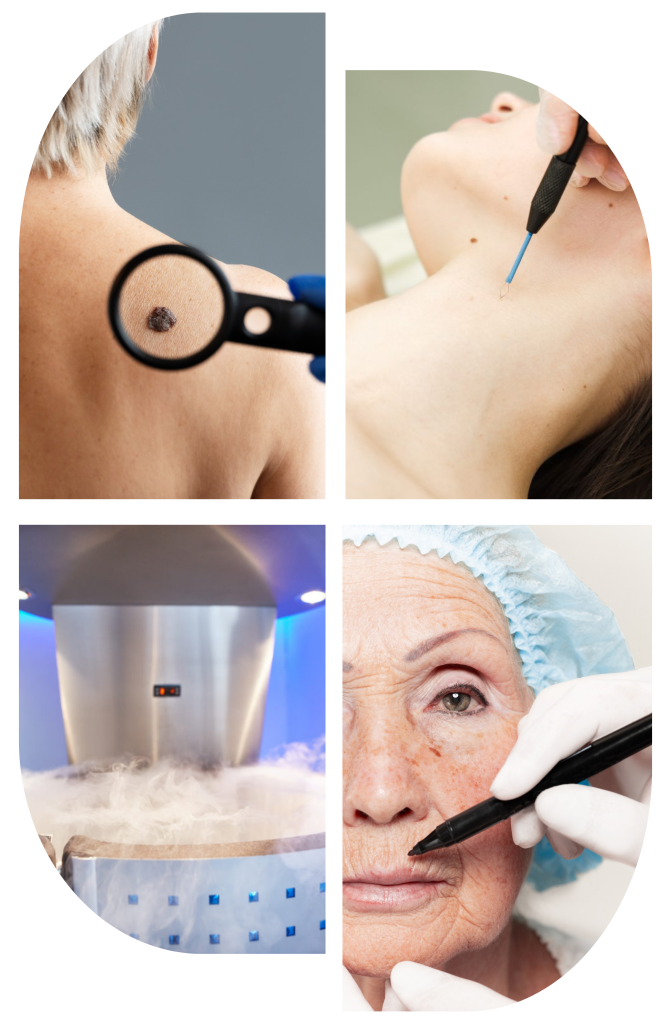
Curettage and cautery are minimally invasive techniques commonly used to treat superficial skin cancers, benign lesions, and precancerous cell clusters. During the procedure, a doctor gently scrapes away the abnormal tissue using a spoon-shaped tool called a curette. After the tissue is removed, cautery is used to stop any bleeding and seal the area. This quick and low-risk treatment is especially effective for conditions like basal cell carcinoma (BCC) and squamous cell carcinoma in situ (Bowen’s disease).
Cryotherapy
Cryotherapy is a non-invasive treatment that uses extreme cold to destroy abnormal skin tissue through cryosurgery. This method is widely used by doctors to treat precancerous lesions, benign skin growths, and early-stage skin cancers. Many patients prefer cryotherapy because it offers quick results, requires minimal recovery time, and is highly effective.
Simple Excisions
The procedure starts with the application of a local anaesthetic to numb the affected area. The skin cancer is then precisely removed using a scalpel, and the wound is meticulously stitched to support optimal healing.
Flap Surgery
This treatment involves carefully repositioning the surrounding skin tissue to close the wound after skin cancer removal. It is commonly used when:
The wound is too large to be closed with nearby skin alone.
A standard elliptical closure could affect nearby structures, especially on the face, such as the eyes or nose.
Graft Surgery
Similar to flap surgery, graft surgery is performed when the wound resulting from skin cancer removal is too large to be closed by suturing the surrounding tissue. This procedure involves harvesting a thin layer of skin (graft) from another area of the body, typically the upper arm or thigh, and carefully placing it over the wound to facilitate healing.
Margin Control Surgery
Margin control is a microscopically guided surgical technique that involves carefully examining all removed skin tissue for cancer cells before closing the wound, especially in cosmetically sensitive areas. This method ensures accurate and complete skin cancer removal while preserving the maximum amount of healthy tissue.
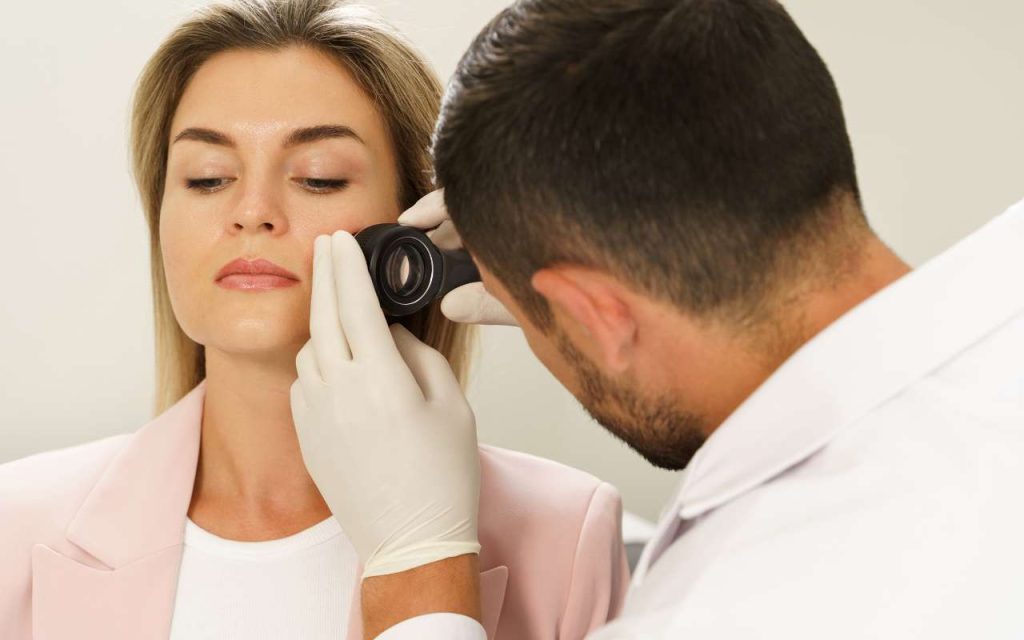
Advanced Dermoscopy Evaluation
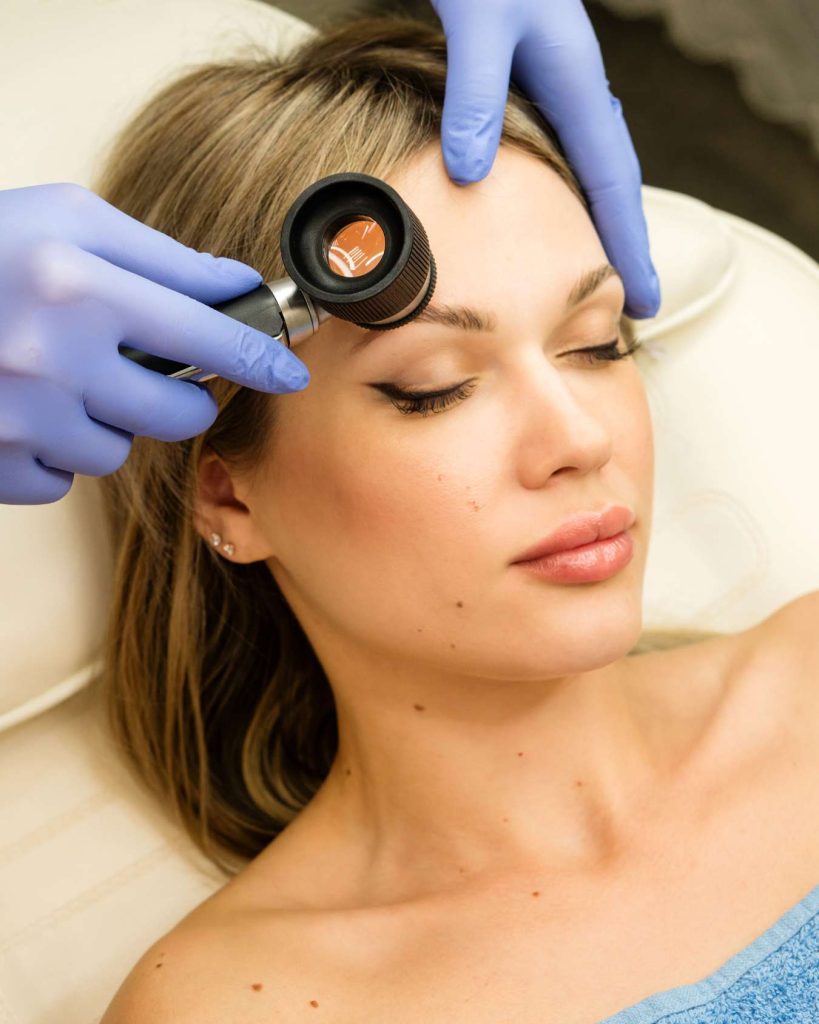
Advanced dermoscopy evaluation is a non-invasive technique used to accurately assess skin lesions. A dermatoscope—a magnifying device with polarised light—allows specialists to examine skin structures that are not visible to the naked eye. This powerful tool plays a vital role in detecting skin cancer, including melanoma, as well as other dermatological conditions in their early stages.
How to do a skin check?
Your most trustworthy observers of skin changes will be yourself and your family members because they can identify new or altered skin features better than anyone else. Familiarise yourself with both your skin moles and their locations while practising regular skin checks. The Skin Cancer College Australasia encourages the use of an easy-to-remember two-step alert system.
Australian residents hold the distinction of facing one of the world’s most elevated rates of skin cancer since 2 out of 3 people develop the condition by their seventh decade. The good news? Proper skin examination combined with sun protection serves as the primary preventive measures for preventing most skin cancers..
You have to know more...
Breating the skin cancer epidemic
The risk of cancer increases with age, and as the population increases, the number of adults who seek treatment significantly increases. In all cancers, skin cancer is the most common in Australia. Each year, about 80% of all recently diagnosed cancer, including melanoma and non-moloronoma types such as both BCC and SCC.
Australia is one of the highest melanoma speeds globally in Australia, of which two of the two Australians are expected to diagnose skin cancer for the age of 70. Each year, around 434,000 Australians receive treatment for non-moloronoma skin cancer people daily for more than 1,000 cases daily for more than 1,000 cases daily.
Previously, awareness of risks associated with ultraviolet (UV) exposure – both natural and artificial – was limited. Today we understand that there is nothing like a “healthy body”, and more than 95% of skin cancer is associated with sun exposure.
How long does a skin check take?
A comprehensive skin check commonly takes between 20 to half-hour, depending at the variety of moles or lesions. This also consists of time for the doctor to check your medical history, as it may influence your chance of developing skin cancer.
What equipment does the doctor use?
At Skin Cancer Centre, our expert skin cancer doctors specialise in dermoscopy. Using a dermatoscope—a magnifying device with built-in light—they closely examine any suspicious spots to provide an accurate diagnosis. This allows for a detailed and painless assessment of moles and lesions. When necessary, our doctors also capture dermoscopic images to track changes over time for ongoing monitoring.
What happens if the doctor finds anything which could be skin cancer?
If your doctor identifies any spot or area that requires further investigation, they will inform you right away. To examine a suspicious area, a small biopsy (tissue sample) may be taken or the lesion may be completely removed under local anaesthetic. In many cases, a follow-up appointment is recommended to address any unusual moles or skin lesions.
This minor procedure is typically performed in a medical clinic, avoiding the need for a hospital visit. Once removed, the sample is sent to a pathology laboratory for analysis, and results are usually available within a few days, depending on the pathology provider.
What happens if skin cancer is found?
In most cases, when detected early, skin cancers can be successfully treated with surgery, often resulting in a complete cure. While surgical removal is the most common treatment, other options such as topical creams, radiotherapy, or light therapy may also be considered, depending on the type of skin cancer diagnosed.
What happens after the skin check?
Your doctor will determine how often you need skin checks based on your individual risk of developing skin cancer. Follow-up intervals can range from every few months to annual or even biennial visits. While most clinics use automated reminders for scheduled skin checks, it’s also helpful to mark these appointments in your own calendar as a backup.
Understanding Skin Cancer
Skin cancer is among the most common cancers globally, with approximately 90% of cases attributed to sun exposure. It encompasses various types, including Basal Cell Carcinoma (BCC), Squamous Cell Carcinoma (SCC), and Melanoma.
Basal Cell Carcinoma
Slow-growing, but can cause significant damage if untreated.
Squamous Cell Carcinoma
Can metastasize but curable if detected early.
Melanoma
The most dangerous form; early detection is crucial for survival.

What Our Patients Said
Our experienced doctors specialise in skin cancer medicine, with extensive training and thousands of diagnoses.
Linda K.
“Highly recommend!”
The staff were friendly and efficient, and the results were thorough. I feel safe knowing I’m in good hands.
James P.
“Peace of mind, finally!”
I’ve always been worried about my skin, but after my visit, I feel more confident. They spotted an issue I hadn’t even noticed.
Emma R.
“Highly recommend!”
The staff were friendly and efficient, and the results were thorough. I feel safe knowing I’m in good hands.
Sarah L.
“Exceptional care and attention!”
The doctors made me feel comfortable and explained everything in detail. The whole process was quick and reassuring.
Mark T.
“A life-saving service!”
I had no idea a small mole could be so dangerous. Thanks to the thorough skin check, I caught it early. I can’t recommend them enough!
This is Our Schedule and Make an Appointment
We’re here to make your skin health a priority! Check our schedule below and easily book your appointment for a full-body skin check or consultation
Weekly Schedule
Mon - Tues
8 AM – 5 PM
Wed - Thur
9 AM – 5 PM
Friday
9 AM – 7 PM
Saturday
10 AM – 4 PM
Sunday
CLOSED
Visit The Expert
4/8 Halcyon Way, Hope Island QLD 4212, Australia 5/5 Attenborough Blvd, Pimpama QLD 4209 Australia

Early diagnosis is critical, and our specialists use advanced technologies to detect skin cancer early.
(07) 5514 1616
Contact Us
Copyright © 2025 Skin Cancer Centre. All rights reserved | Web Design By Digital Marketers Perth